
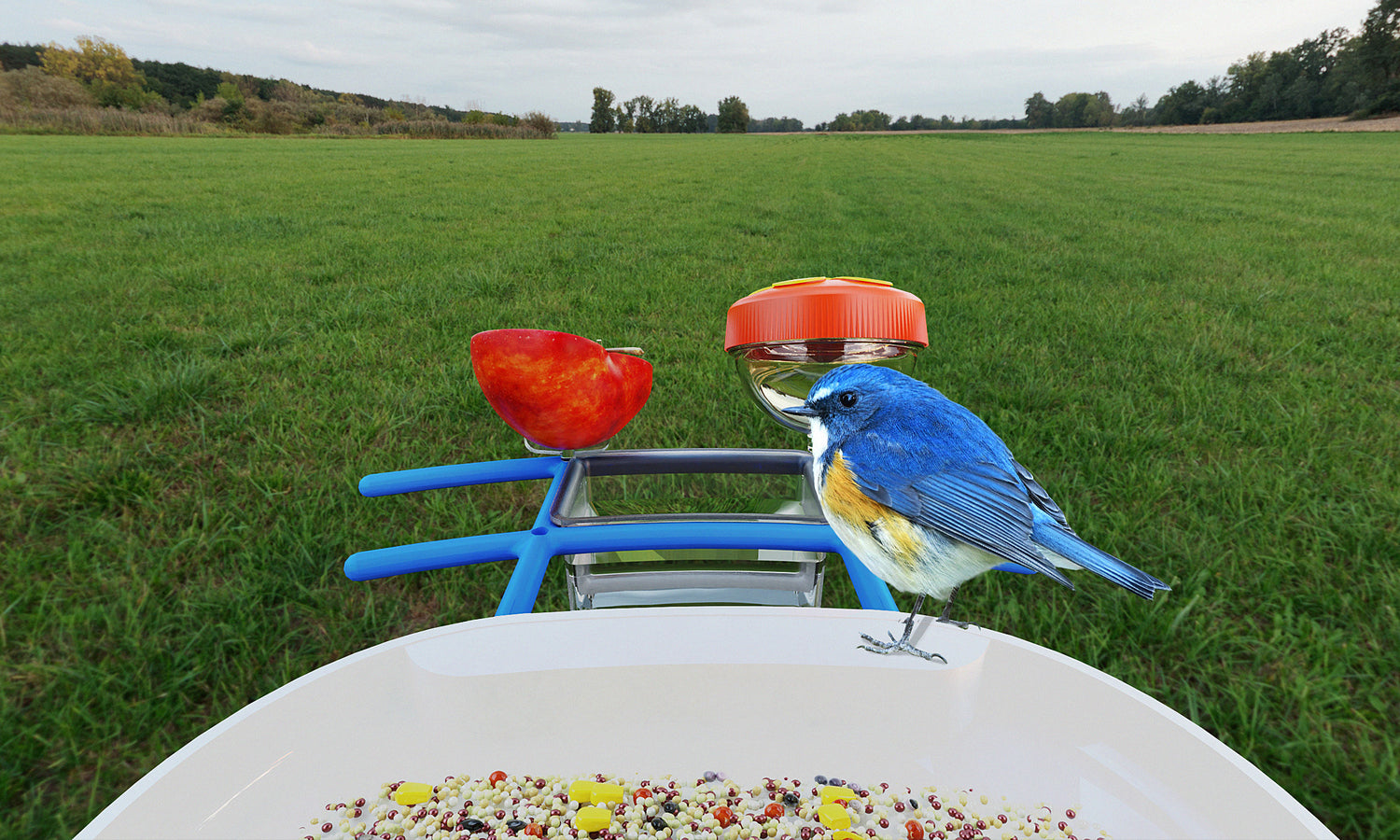
The Squirrel Problem Is Real
If you feed birds, you feed squirrels — unless you take deliberate steps to stop them. Squirrels can jump 10 feet horizontally, drop 8 feet vertically onto a feeder, chew through plastic and thin metal, and figure out most mechanical deterrents within days. They're not pests so much as highly motivated engineers.
The good news: squirrel-proofing actually works when you use the right combination of methods. Here's an honest breakdown of every approach.
Method 1: Caged Feeders
How it works: A wire cage surrounds the feeder with openings large enough for small birds but too small for squirrels.
Pros: Effective against squirrels and large bully birds (starlings, grackles) simultaneously. No moving parts to fail.
Cons: Also excludes larger desirable birds like cardinals, woodpeckers, and jays. Cage can get dirty and needs regular cleaning.
Verdict: Good for chickadee/finch-focused setups. Not ideal if you want to attract a wide variety of species.
Method 2: Weight-Sensitive Feeders
How it works: A spring-loaded perch closes seed ports when weight exceeds a set threshold — heavy enough to trigger on a squirrel, light enough to stay open for birds.
Pros: Highly effective when properly calibrated. Allows large birds like cardinals to feed if the threshold is set correctly.
Cons: Mechanical parts can fail or jam. Squirrels sometimes learn to hang from the top rather than perching. More expensive than basic feeders.
Verdict: One of the better feeder-level solutions, but works best combined with a baffle.
Method 3: Squirrel Baffles
How it works: A dome or cylinder mounted on the pole below the feeder prevents squirrels from climbing up. A dome mounted above the feeder prevents squirrels from dropping down.
Pros: Highly effective when properly installed. Works with any feeder type. No moving parts.
Cons: Must be positioned correctly — too low and squirrels jump over it; too close to a tree or fence and they bypass it entirely. Aftermarket baffles often don't fit poles securely.
Verdict: The most reliable squirrel-proofing method available — especially when the baffle is integrated into the pole system rather than added as an afterthought.
Method 4: Pole Placement
How it works: Position the feeder pole far enough from any launch point (trees, fences, structures) that squirrels can't jump to the feeder directly.
The numbers: Squirrels can jump approximately 10 feet horizontally and drop 8 feet from above. Your pole needs to be at least 10 feet from any tree, fence, or structure — and the feeder should be no higher than 5 feet off the ground to prevent drop attacks from overhanging branches.
Verdict: Essential as a foundation. Placement alone isn't enough — combine with a baffle for reliable protection.
The Most Effective Setup: Pole + Integrated Baffle
The combination that consistently works is a dedicated pole station with an integrated squirrel baffle, positioned correctly in the yard. This approach addresses both climbing and jumping attack vectors without relying on mechanical parts that can fail.
Both the PerchMe 91" Standard Pole Station and the PerchMe 92" Deluxe Pole Station include a wide integrated squirrel baffle designed to work with the pole geometry — no aftermarket fitting required. The heavy-gauge steel construction also means squirrels can't chew through the pole itself, which happens with cheaper aluminum or plastic poles.
What About Squirrel-Repellent Sprays and Spinning Feeders?
Hot pepper additives: Birds can't taste capsaicin; squirrels can. Adding hot pepper powder or buying capsaicin-treated seed does deter squirrels — but needs to be reapplied after rain and can irritate your own eyes and skin during handling.
Spinning/motorized feeders: Feeders that spin when a squirrel's weight is detected are entertaining and moderately effective. Squirrels sometimes learn to approach slowly enough to avoid triggering the spin. Best used as a supplement, not a primary solution.
Verdict on both: Useful additions but not reliable as standalone solutions.
The Honest Answer
No single method is 100% squirrel-proof against a determined squirrel. But the combination of correct pole placement (10+ feet from launch points) + integrated baffle + heavy-gauge steel pole eliminates the vast majority of squirrel access. Most squirrels will give up and move on when these three elements are in place.
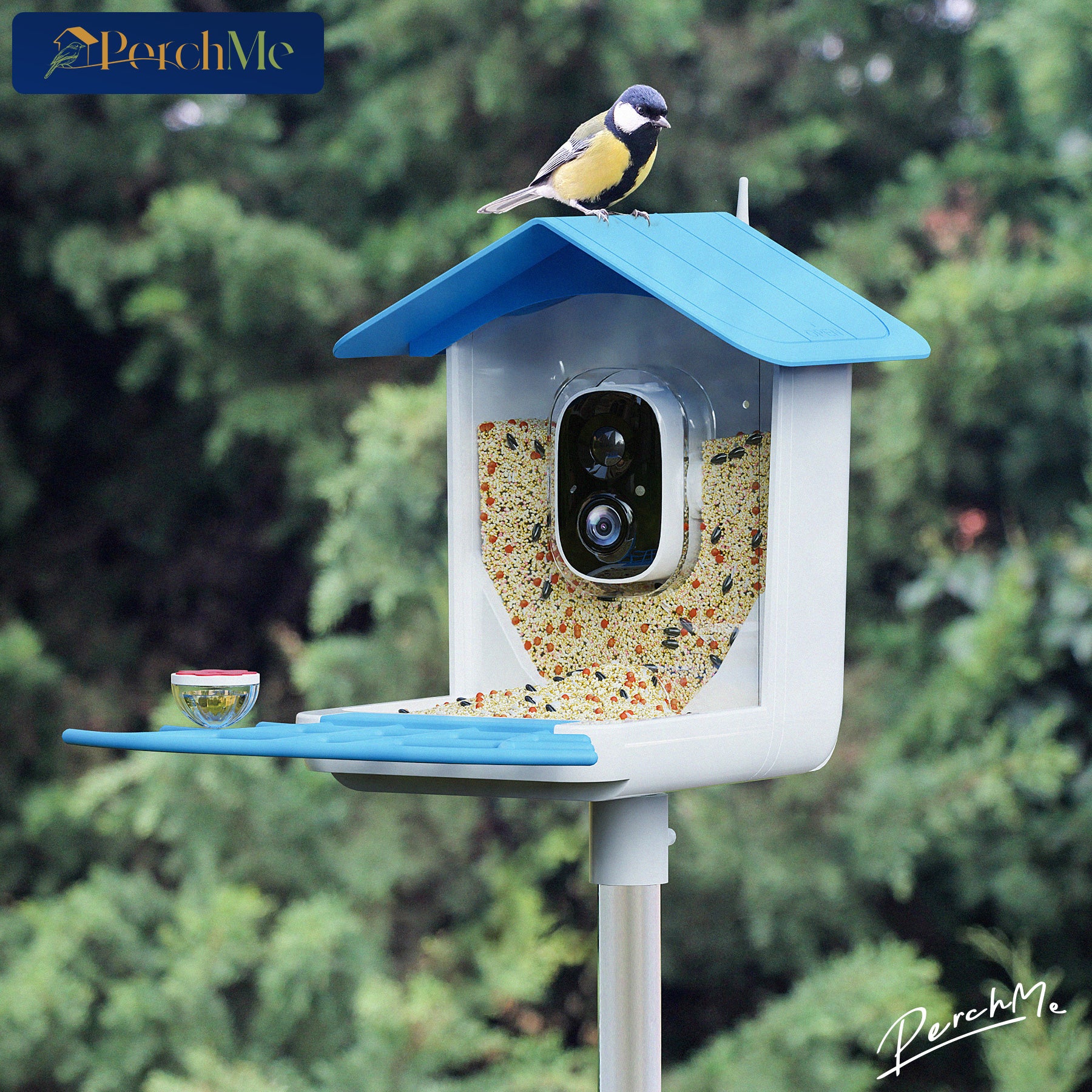
The feeders themselves — including the PerchMe Smart AI Bird Feeder — are designed to mount on the pole system, so the baffle protects every feeder you run from the same anchor point.
Quick Setup Checklist
- Position pole at least 10 feet from trees, fences, and structures
- Set feeder height at 4–5 feet (not higher — reduces drop-attack risk)
- Use a pole with an integrated wide baffle (not an aftermarket clip-on)
- Check for overhanging branches within 8 feet above the feeder
- Use heavy-gauge steel — squirrels chew through plastic and thin aluminum
Shop squirrel-proof pole stations: 91" Standard | 92" Deluxe

Leave a comment
All comments are moderated before being published.
This site is protected by hCaptcha and the hCaptcha Privacy Policy and Terms of Service apply.